Analysis of the Certification Processes for FOUNDATION Fieldbus, PROFIBUS PA, and HART Devices
1. Why Industrial Communication Device Certification Is Growing Increasingly Important

1.1 Challenges of Device Interconnection in the Context of Digitalization in Process Industries
With the deepening intelligent and digital transformation in the process industry, production models in core sectors such as petrochemicals, chemicals, power generation, pharmaceuticals, and water treatment have undergone fundamental changes. The traditional model of isolated operation of individual device has been completely replaced, with comprehensive device networking, data interoperability, remote control, and intelligent operation and maintenance becoming industry standards. The process industry is characterized by diverse device types, fragmented brands, mixed use of old and new device, and complex operating environments (high temperature, high pressure, humidity, strong electromagnetic interference). Numerous field devices—including transmitters, control valves, analyzers, and controllers—must be connected to the control system via unified communication protocols to achieve full-process digitization for data acquisition, parameter regulation, fault diagnosis, and device management.
However, in practical engineering implementation, issues with device interconnection frequently arise : problems such as incompatible devices from different brands using the same protocol failing to establish proper networking, data packet loss and latency, abnormal parameter read/write operations, device disconnections and restarts, and system compatibility conflicts are widespread. Traditional manual debugging and on-site configuration methods are not only inefficient and costly but also prolong production line commissioning cycles, compromise operational stability, and may even pose safety risks during production. In this context, standardized certification for industrial communication device has become a critical requirement for overcoming interconnection barriers and ensuring stable operation of industrial systems.
1.2 "Capable of Communication" does not equate to "Capable of Interoperability".
There is a widespread misconception in the industry: merely supporting HART, PROFIBUS PA, or FOUNDATION Fieldbus protocols ensures device interoperability. In reality, protocol compatibility only indicates a device's basic communication capabilities, whereas interoperability constitutes the core criterion for device networking—there exists an essential distinction between the two.
"Capable of Communication" represents a fundamental, surface-level ability, referring to a device's capacity to perform basic signal transmission and simple data reporting in accordance with protocol specifications, meeting only the basic communication requirements of a single point and one-way communication; whereas "Capable of Interoperability" denotes an advanced collaborative capability, requiring devices from different manufacturers and models that adhere to the same protocol to seamlessly interconnect within the same bus network, enable bidirectional data exchange, support unified parameter configuration, perform coordinated logical operations, respond collectively to faults, and ensure communication stability, real-time performance, and consistency comply with industry standards.
Uncertified protocol devices commonly suffer from issues such as non-standard protocol stack configurations, inconsistent parameter definitions, non-standard signal timing, and lack of functional compatibility, often leading to problems like "single-function operation, failed networking, and interoperability issues between devices using the same protocol." For example, some non-standard HART devices can read data independently but lack support for remote parameter calibration or network communication; certain FOUNDATION Fieldbus devices can connect to the bus but cannot perform inter-meter configuration, significantly compromising the overall reliability of industrial control systems.
1.3 The Essential Value of Certification
The essence of device certification extends far beyond merely obtaining compliance certificates or meeting bidding requirements. It involves standardized testing, compliance audits, and consistency validation to ensure, from the outset, that industrial device meets protocol specifications, maintains communication consistency, ensures network interoperability, and achieves stable performance under various operating conditions—thereby providing fundamental assurance for the long-term stable operation of industrial systems. Its core value manifests itself across four key dimensions.
First, technical value: Standardizing device communication protocols eliminates vendor-specific technical barriers, enables seamless compatibility across multiple brands of device, significantly reduces on-site debugging costs and system failure rates, while enhancing the real-time performance, reliability, and anti-interference capabilities of industrial network communications.
Second, engineering value: It provides a unified basis for project design, device selection, system integration, and operation/ maintenance upgrades, preventing rework and schedule delays caused by device compatibility issues, while meeting the core requirements of continuous, uninterrupted production in process industries.
Third, industrial value: Standardize R&D and production criteria for the industrial communication device sector, phase out non-standardized and substandard protocol devices, promote standardized and regulated industry development, and foster a unified industrial communication ecosystem.
Fourth, safety value: Through rigorous testing of electrical performance, interference resistance, and fault tolerance, it mitigates safety risks such as process instability, data distortion, and device failures caused by communication anomalies, ensuring safe and stable production in process industries.
II. Overview of the Three Major Protocol Standards: FOUNDATION Fieldbus, PROFIBUS PA, and HART
HART, PROFIBUS PA, and FOUNDATION Fieldbus are the three most widely adopted and recognized fieldbus communication protocols in modern process industry automation. Each protocol differs in its positioning, architecture, functionality, and application scenarios, with corresponding certification standards and testing priorities tailored accordingly, serving as the core communication foundation for hierarchical networking and control systems in industrial environments.
2.1 HART: The mainstream protocol that combines traditional and intelligent features
HART (Highway Addressable Remote Transducer) is a hybrid communication protocol that combines 4–20 mA analog signals with digital signals, and it remains the most widely adopted protocol in industrial applications. It seamlessly integrates with both traditional analog control systems and modern digital intelligent systems, enabling a smooth transition toward smart upgrades of conventional device.
The HART protocol employs FSK (Frequency Shift Keying) modulation technology, enabling functions such as digital parameter reading/writing, fault diagnosis, configuration calibration, and multi-point communication without interfering with 4–20 mA analog signal transmission. It supports both wired HART and wireless HART implementations. With its simple architecture, easy deployment, low cost, and excellent compatibility, the protocol is widely used in temperature, pressure, level, flow rate, and other conventional process parameter monitoring systems across industries including petrochemicals, power generation, and water treatment.
Its key features include analog-digital dual-mode communication, backward compatibility, flexible deployment, and high cost-effectiveness. As a lightweight industrial communication protocol, it focuses on single-point data exchange between devices and remote operation and maintenance, without supporting complex distributed control systems. Its authentication mechanisms emphasize consistency of basic communication, signal stability, and protocol compliance.
2.2 PROFIBUS PA: The fieldbus for process automation
PROFIBUS PA is a fieldbus protocol specifically designed for process automation in the industrial sector, representing a dedicated branch of the PROFIBUS series. It fully complies with industrial explosion-proof and intrinsically safe requirements, making it the mainstream bus standard for high-risk process applications. Based on the IEC 61158 international standard, the PROFIBUS PA protocol features an integrated two-wire design for power supply and signal transmission, supporting intrinsically safe operation, long-distance communication, bus redundancy, and multi-device networking.
Compared to the HART protocol, PROFIBUS PA offers higher communication speeds, greater data transmission capacity, and enhanced network stability. It supports batch data synchronization among devices, precise clock synchronization, and real-time fault reporting, making it ideal for continuous, high-precision, and highly reliable process control applications. Widely used in industries with stringent explosion-proof requirements such as chemical, oil & gas, and pharmaceutical sectors, it covers core field devices including control valves, smart transmitters, and online analyzers.
Its core advantages include strong explosion-proof compatibility, stable bus networking, high real-time performance, and support for complex system configurations. Certification focuses on critical performance aspects such as protocol consistency, explosion-proof operation compliance, redundant communication, and clock synchronization.
2.3 FOUNDATION Fieldbus: Function Block Control Architecture
The FOUNDATION Fieldbus is a fully digital, bidirectional, multi-site protocol specifically designed for large-scale distributed control systems in process industries, compliant with the IEC 61158 international standard. Its key distinction from HART and PROFIBUS PA lies in its built-in distributed function block control architecture.
The FOUNDATION Fieldbus protocol eliminates the traditional centralized control model of controllers by directly integrating control algorithms and logical function blocks into field devices, enabling them to independently perform closed-loop control, logical operations, and interlocking protection, while the controller is solely responsible for monitoring and scheduling, achieving true distributed intelligent control. The FOUNDATION Fieldbus comprises the H1 low-speed bus (31.25 kbps, suitable for field device networking) and the HSE high-speed Ethernet bus, supporting bus power supply, intrinsic security with explosion-proof capability, device redundancy, and system self-healing; its communication accuracy, synchronization, and system autonomy far surpass those of other protocols.
This protocol is primarily deployed in large-scale, high-end continuous production facilities across the petrochemical, coal chemical, and power industries, where stringent requirements are imposed on system autonomy, stability, and fault tolerance. The corresponding certification framework is the most rigorous, focusing on evaluating compliance of functional blocks, distributed control logic, bus synchronization accuracy, as well as system fault tolerance and self-healing capabilities.
III. Industrial Communication Certification System and Standard Architecture
3.1 Composition of the Certification System
The three major industrial communication certification standards—FOUNDATION Fieldbus, PROFIBUS PA, and HART—follow a comprehensive closed-loop system comprising "international standard specifications + oversight by official associations + third-party laboratory testing + official review and registration + lifelong traceability monitoring." The framework consists of four core tiers, with each level imposing constraints and undergoing rigorous validation to ensure the certification's authority and compliance.
Level 1: International Standards Layer. Built upon the IEC 61158 fieldbus international standard as the core foundation, this layer incorporates dedicated technical specifications for each protocol, clearly defining the protocol architecture, communication timing, data formats, functional definitions, testing methods, and performance metrics, serving as the fundamental basis for all certification tests.
Second Level: Association Standardization Layer. Official authoritative organizations established by the agreement shall develop detailed certification specifications, testing outlines, access requirements, and registration procedures to unify global certification standards, eliminate regional or institutional testing discrepancies, and ensure consistent interoperability of devices worldwide.
Third Level: Test Execution Layer. Globally authorized third-party accredited laboratories conduct consistency testing, interoperability testing, and operational condition adaptability testing, issuing standardized test reports. All testing procedures, device, and scenarios must undergo official calibration.
Level 4: Registration Review Stage. The official association conducts final review of test reports, device documentation, and corporate qualifications. Upon approval, certification certificates are issued, authorization for using the official logo is granted, and the device is included in the global official device catalog to ensure full network accessibility and complete traceability.
3.2 Major International Certification Organizations
All three major certification agreements are administered by independent international authoritative bodies, each fulfilling distinct responsibilities under separate oversight—a key guarantee of their compliance and authority.
FieldComm Group: The sole official certification authority for global HART and FOUNDATION Fieldbus protocols, overseeing standard updates, certification specifications, laboratory accreditation, testing audits, product registration, and catalog management. It is responsible for compliance certification of all HART and FOUNDATION Fieldbus smart devices worldwide, serving as the highest authoritative body for these two protocols.
PROFIBUS & PROFINET International: The sole official governing body for the entire global PROFIBUS protocol suite (including PROFIBUS PA), responsible for leading PROFIBUS PA protocol standardization updates, certification framework development, testing specification formulation, authorization laboratory management, product certification audits, and ensuring consistency and interoperability of PROFIBUS PA devices worldwide.
Meanwhile, both institutions have established stringent laboratory authorization systems, permitting only third-party laboratories that have passed official review, device calibration, and qualification certification to conduct certification testing under the relevant agreements, thereby eliminating industry malpractices such as unauthorized testing and fraudulent certifications.
IV. Analysis of the HART Device Certification Process

4.1 Overall HART Certification Process
HART device certification is fully managed by FieldComm Group and comprises six core stages: enterprise qualification assessment, preliminary self-testing, documentation submission, formal laboratory testing, official review and registration, and certificate authorization. The process is standardized, closed-loop, and fully traceable, with specific steps as follows:
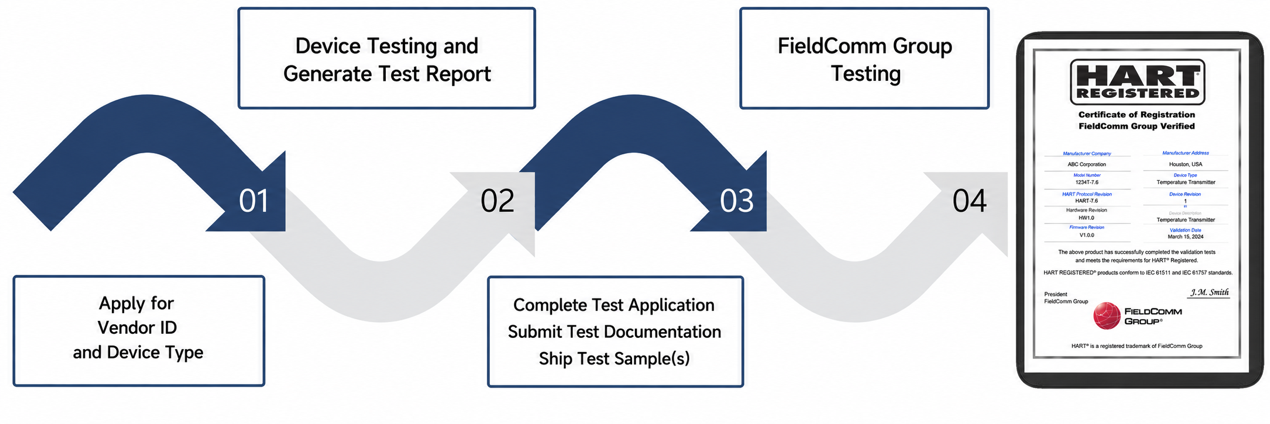
Step 1: Enterprise Qualification Access. Applying enterprises must first register as an FieldComm Group member to obtain official certification permissions, the latest agreement specifications, and test kits. Non-member enterprises cannot submit certification applications and can only access public basic information.
Step 2: Initial Product Self-Testing and Correction. The company shall conduct internal product self-testing in accordance with the HART testing specifications issued by FieldComm Group (including standards such as HCF_TEST-4 and TT20004), focusing on identifying issues related to protocol stack compliance, signal stability, and instruction compatibility. Bugs should be corrected proactively to mitigate risks of failure during formal testing, while also compiling a complete set of documentation including self-test reports, product manuals, protocol stack source code, and FDI files.
Step 3: Online Application and Document Submission. The company creates a certification ticket on the FieldComm Group official platform, submits required documents—including purchase orders, corporate qualifications, product technical specifications, self-test records, FDI source code, and device hardware/software version information—and initiates the certification application.
Step 4: Preliminary Document Review. The FieldComm Group official review team conducts a compliance check on submitted documents, focusing on verifying document completeness, protocol stack standardization, and FDI file compatibility. Non-compliant documents require supplementation or modification. Upon approval, the enterprise will be notified to submit test samples.
Step 5: Official testing by a third-party laboratory. The authorized laboratory shall establish a standardized testing environment and conduct comprehensive tests covering the physical layer, protocol stack, functional specifications, interoperability, etc., while documenting all test data to produce a standardized test report. If the test fails, the enterprise must rectify the issues and repeat the testing.
Step 6: Final Review and Certification Issuance. FieldComm Group reviews the laboratory test reports, confirms compliance with all requirements, completes official product registration, issues the HART certification certificate, authorizes the enterprise to use the official HART certification mark, and registers the product in the global HART certified device directory for public access and verification across the network.
4.2 Key Test Items for HART Certification
The HART certification test comprises four core modules: hardware physical specifications, protocol stack compliance, functional requirements, and interoperability. All items must meet all criteria 100% to pass certification.
First, physical layer performance testing. The core tests include evaluating the frequency accuracy, waveform integrity, signal amplitude, and loop impedance compatibility of FSK (Frequency Shift Keying) signals; verifying that the device exhibits no signal interference, waveform distortion, or frequency deviation in standard 4–20 mA circuits; assessing bus terminal matching, branch length suitability, and load compatibility; and identifying potential issues such as signal reflection or echo interference.
Second, protocol stack consistency testing. verifies that the device's protocol stack fully complies with the latest HART protocol specifications, including standardized data frame formats, address definitions, transmission timing, and error-check mechanisms, eliminating violations such as protocol truncation or custom private fields to ensure consistent fundamental communication.
Third, general commands and specialized function testing. In accordance with the HART General Command Specification, test the device's basic functions—including parameter reading/writing, range calibration, unit switching, device information retrieval, fault diagnosis, and zero-point verification—as well as the compliance of its dedicated extended functions, ensuring precise command responses without errors or data anomalies.
Fourth, interoperability and stability testing. Conduct interoperability tests with mainstream HART host computers, gateways, and control systems to verify the stability of cross-brand device networking, data interaction, and remote configuration. Additionally, perform prolonged continuous communication tests to identify issues such as disconnections, packet loss, and latency.
4.3 Common Issues in HART Certification
Based on practical industry certification experience, HART device certification failures primarily stem from four common issues, which also represent key areas for corporate R&D and improvement efforts.
First, physical layer signal parameters exceed specifications. Issues include frequency deviation, waveform distortion, and insufficient signal amplitude in FSK signals; poor circuit load compatibility; signal attenuation and data packet loss under heavy-load conditions, which are primarily attributed to non-standard hardware circuit design or improper selection of modulation modules.
Second, the protocol stack customization is non-standard. Some enterprises, in an effort to streamline R&D and reduce costs, arbitrarily modify standard protocol specifications and alter data frame formats, resulting in devices that can only communicate individually but lack compatibility with mainstream systems and gateways, leading to failed interoperability testing.
Third, incompatibility of FDI/DD documents. Common issues during the documentation review phase include non-standard device description files, missing parameter definitions, and incorrect function mappings, which prevent the host computer from properly identifying devices, reading parameters, or issuing configuration commands.
Fourth, the operational stability is insufficient. During prolonged network testing, issues such as device disconnections, reboots, and command response timeouts have occurred, coupled with poor resistance to electromagnetic interference, resulting in substandard communication stability under complex industrial conditions.
V. Analysis of the PROFIBUS PA Device Certification Process

5.1 PA Certification Process
PROFIBUS PA device certification is uniformly regulated by the PI Association, featuring a rigorous process with clearly defined stages that prioritize bus networking performance and explosion-proof compliance. The certification process consists of three phases: pre-test, formal test, and review/registration, as detailed below:
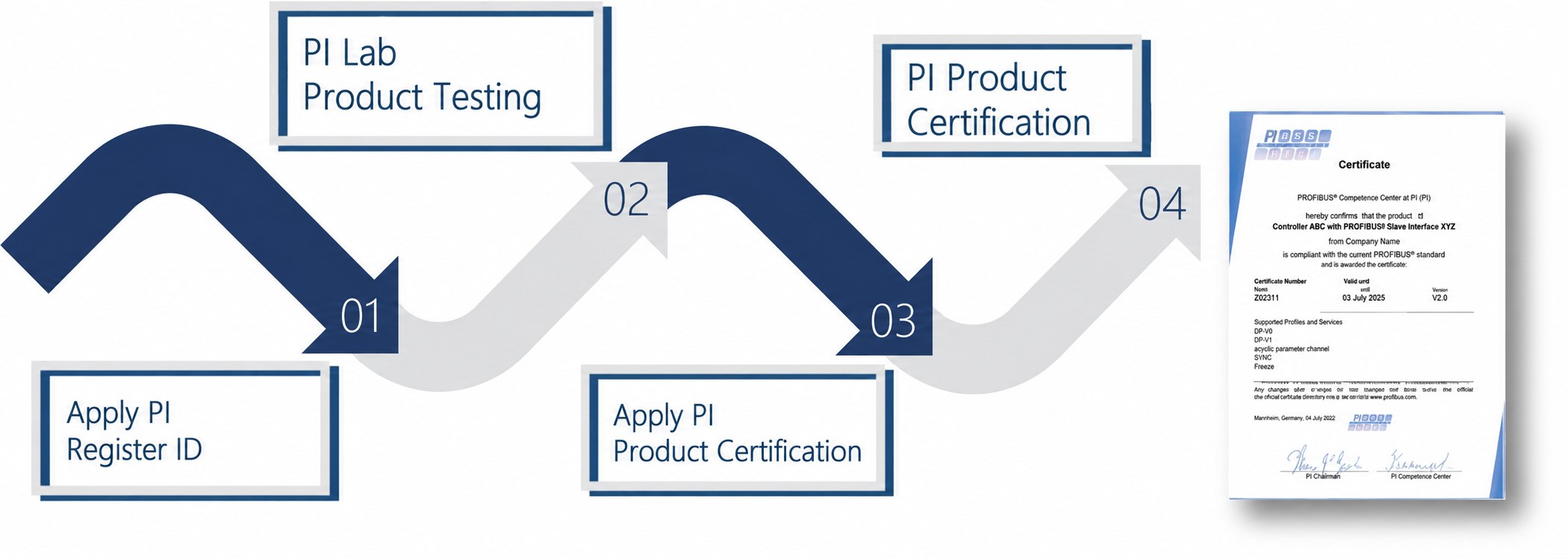
Step 1: Preliminary preparation and pre-testing. The enterprise shall complete the development of product software and hardware in accordance with the PA protocol standards and testing specifications issued by the PI, establish a self-testing environment, conduct pre-tests covering protocol compliance, basic communication, bus power supply, and intrinsically safe adaptation, address identified issues in advance, and finalize the product specification document, software/hardware documentation, and explosion-proof certification materials.
Step 2: Submit the certification application. The company submits the application to a third-party certification laboratory authorized by the PI, along with product prototypes, technical documentation, self-test reports, explosion-proof certification documents, and corporate qualifications, while confirming the testing plan and schedule.
Step 3: Comprehensive formal laboratory testing. The authorized laboratory shall establish a standard PA bus test network to simulate industrial field networking conditions, conducting full-scale tests covering protocol consistency, real-time performance, clock synchronization, redundant communication, intrinsically safe explosion-proof capability, interference resistance, and interoperability. Test data shall be recorded, a preliminary test report issued, and identified issues shall be fed back to the enterprise for rectification and retesting.
Step 4: Final official review by the PI. The laboratory submits the qualified test report to the PI's headquarters, where the official review team verifies compliance of the testing procedures, data authenticity, and product technical specifications to eliminate any testing deficiencies or non-standard product issues.
Step 5: Registration, Certification, and Public Disclosure. Upon approval, the PI will issue an official PROFIBUS PA certification certificate to the enterprise, authorize its use of the PROFIBUS PA certification mark, and include the product in the global PROFIBUS compliant product catalog to achieve worldwide mutual recognition and interoperability.
5.2 Key Test Items for PA Certification
The PROFIBUS PA certification addresses the core requirements of explosion-proof operation, networking, and real-time control in process industries. Its key test items differ from those of HART, focusing on bus performance, operational condition compatibility, and system interoperability.
First, protocol compliance testing. Strictly verify core protocol parameters—including PA bus data frame structure, communication timing, baud rate adaptation, address addressing, error checking, and retransmission mechanisms—to ensure full compliance with IEC 61158 and PI official specifications, and to prevent any modifications to proprietary protocols.
Second, bus physical performance and power supply testing. This includes evaluating the signal transmission quality of two-wire buses, attenuation characteristics over long distances, and power supply stability; verifying the electrical safety of devices under intrinsically safe explosion-proof conditions; assessing insulation performance, voltage withstand capability, and electromagnetic interference suppression capacity; and ensuring compatibility with high-risk industrial environments.
Third, real-time synchronization testing with clock synchronization. This test evaluates data transmission latency on the bus, synchronization accuracy, and network synchronization among multiple devices, ensuring precise coordinated control and interlocking operations among field devices to meet the high-precision control requirements of process industries.
Fourth, redundancy and fault tolerance performance testing. This involves simulating abnormal operating conditions such as bus disconnection, device failure, and signal interference to evaluate the bus's redundancy switching capability, device fault-tolerant communication, self-healing functionality, and anomaly reporting mechanisms, thereby verifying the system's operational stability.
Fifth, cross-device interoperability testing. Connect the device under test with mainstream PA controllers, gateways, and PA field devices from other brands to evaluate functions such as batch data exchange, parameter configuration, remote monitoring, and fault linkage, ensuring full ecosystem compatibility.
5.3 Common Issues in PA Certification
The main challenges in PROFIBUS PA device certification lie in bus networking performance, explosion-proof compliance, and real-time control capabilities. Key issues include the following:
First, the bus synchronization accuracy fails to meet specifications. Significant clock synchronization deviations occur across multiple devices, leading to inconsistent coordinated control and interlocking responses among devices, which compromises system control precision and constitutes the primary failure cause in high-end control scenario testing.
Second, there is a defect in compliance with intrinsically safe operating conditions. The device's electrical parameters do not meet the explosion-proof requirements specified for intrinsically safe systems; under bus-powered operation, current and voltage levels exceed permissible limits, interference resistance is insufficient, communication becomes unstable under high-risk conditions, and the device fails to pass explosion-proof conformity testing.
Third, redundant switching fails. During bus redundancy and device redundancy switching processes, issues such as data interruptions, device disconnections, and parameter loss may occur; the fault-tolerance mechanisms are inadequate, and the system's self-healing capability is insufficient under abnormal operating conditions.
Fourth, poor networking compatibility. While some devices can communicate independently, networking multiple devices often leads to bus conflicts, data congestion, and addressing anomalies, making it unsuitable for large-scale bus networking scenarios.
VI. Analysis of the FOUNDATION Fieldbus Device Certification Process

6.1 FOUNDATION Fieldbus Certification Process
The FOUNDATION Fieldbus certification is exclusively managed by FieldComm Group and represents the most stringent, comprehensive, and complex certification among the three major protocols, with a focus on distributed function block control and bus system stability. The entire process comprises six distinct phases:
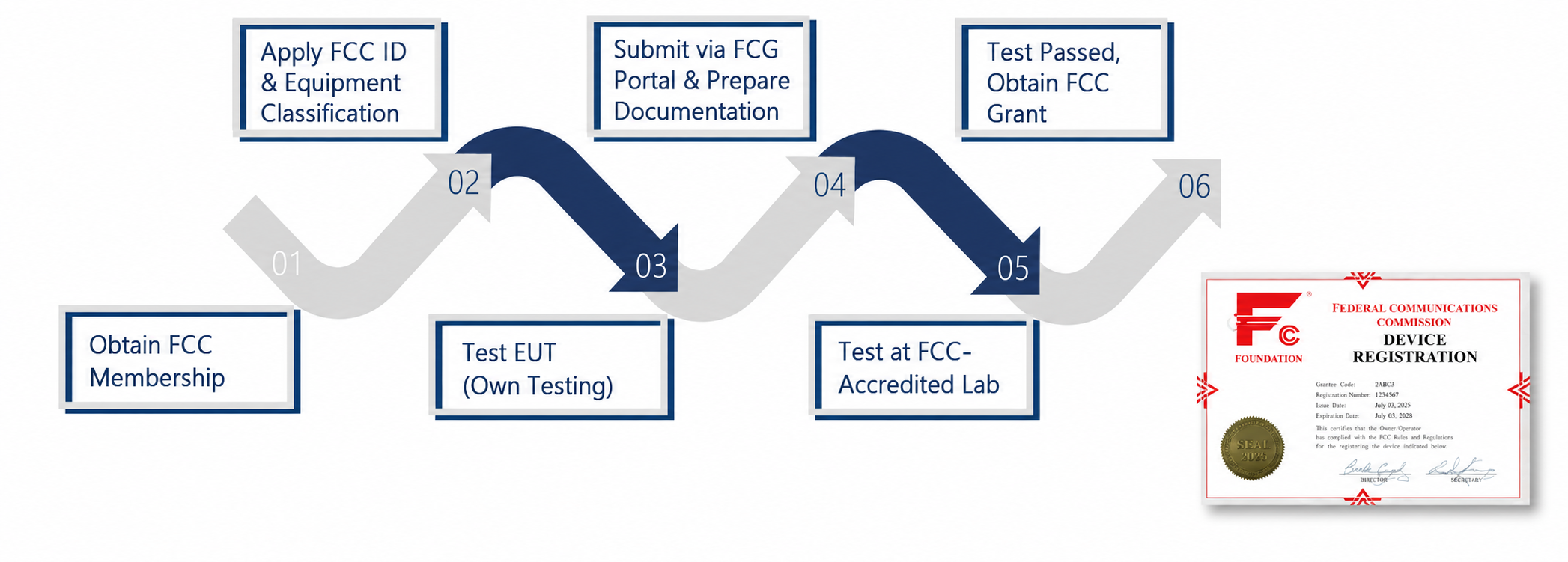
Step 1: Membership Qualifications and Preliminary Preparation. Enterprises must join FieldComm Group to obtain certification authority, thoroughly study the FOUNDATION Fieldbus function block specifications, communication protocol standards, and testing outlines, complete hardware and software development for their devices, with particular emphasis on ensuring compliance and completeness of built-in function blocks.
Step 2: Comprehensive internal self-testing. The enterprise establishes a FOUNDATION Fieldbus -standard testing network to independently conduct full-range self-tests covering protocol consistency, functional block operations, bus synchronization, distributed control, fault tolerance and self-healing, addresses issues such as missing functions, logical errors, and communication anomalies, and refines technical documentation.
Step 3: Document Submission and Preliminary Review. Submit the certification application, product prototype documentation, functional block source code, device specification file, self-test report, and software/hardware version details to FieldComm Group. FieldComm Group will prioritize reviewing document completeness and functional block compliance; non-compliant submissions will be returned for rectification.
Step 4: Authorize the laboratory to conduct in-depth testing. The FieldComm Group -authorized laboratory establishes a fully realistic FOUNDATION Fieldbus industrial networking environment and performs comprehensive, full-scenario, and full-condition in-depth testing covering FOUNDATION Fieldbus 's core components—including distributed control, functional block logic, bus communication, and system fault tolerance. All test data is meticulously documented; any issues identified are reported back to the enterprise for iterative improvement and retesting.
Step 5: Final review by FieldComm Group. The FieldComm Group technical expert team will re-examine the test reports, device functionality, and protocol compliance, with a focus on verifying the control logic of functional blocks and distributed collaboration capabilities, to confirm full compliance with FOUNDATION Fieldbus 's official standards.
Step 6: Registration, Certification, and Ecosystem Integration. Upon approval, complete official product registration, issue the FOUNDATION Fieldbus certification certificate, authorize the use of the certification mark, and include the product in the global FOUNDATION Fieldbus Device Compatibility Directory to ensure interoperability across the global ecosystem.
6.2 Key Test Items for FOUNDATION Fieldbus Certification
The key distinction of the FOUNDATION Fieldbus certification from HART and PROFIBUS PA lies in its emphasis on functional block control and distributed intelligence. Beyond basic communication testing, it introduces a comprehensive set of specialized core test items, organized into five major modules:
First, basic protocol consistency testing. This involves verifying fundamental parameters of the FOUNDATION Fieldbus H1 bus, including physical layer signals, data frame formats, communication timing, transmission rates, bus power supply, and addressing mechanisms, to ensure compliant and stable underlying communication.
Second, functional block compliance and logic testing. This constitutes the core focus of FOUNDATION Fieldbus certification, comprehensively evaluating the completeness, computational accuracy, and logical compliance of standard functional blocks—including AI, AO, PID, accumulation, alarms, and interlocks—in device. It verifies that parameter configurations, algorithm execution, and output responses fully comply with official specifications, with no logical discrepancies or functional deficiencies.
Third, distributed control collaborative testing. This test evaluates the functional block coordination, distributed closed-loop control, and cross-device logical synchronization among multiple FOUNDATION Fieldbus devices, verifying their ability to autonomously achieve precise control and interlocked protection without intervention from a central controller.
Fourth, bus synchronization and real-time performance testing. This involves evaluating the global clock synchronization accuracy of the FOUNDATION Fieldbus, data transmission real-time performance, and task scheduling synchronization among multiple devices to ensure unified control actions without latency or deviations in large-scale networking systems.
Fifth, system fault tolerance and self-healing testing. By simulating scenarios such as bus failures, device offline states, parameter anomalies, and signal interference, the tests evaluate the FOUNDATION Fieldbus 's capabilities in redundant switching, fault isolation, system self-healing, and data backup recovery to ensure continuous and uninterrupted system operation.
6.4 Common Issues in FOUNDATION Fieldbus Certification
The FOUNDATION Fieldbus device certification has the highest requirements, with failure issues predominantly occurring in dedicated functional blocks and distributed control systems. Common problems include the following:
First, the standard functional blocks are incomplete or non-compliant. Enterprises may arbitrarily remove standard functional blocks, modify algorithm logic, or set non-standard parameters for custom functional blocks, resulting in distributed control logic failing to meet official standards and preventing cross-device coordination—this constitutes the primary cause of certification failure.
Secondly, there is insufficient distributed collaborative capability. While individual device functional blocks operate normally, when multiple devices are networked together, cross-device block coordination and closed-loop control may exhibit logical inconsistencies, response delays, or parameter mismatches, preventing the realization of distributed intelligent control.
Third, the bus synchronization accuracy exceeds the specified limits. In large-scale networking scenarios, excessive clock synchronization deviations among devices result in asynchronous control actions across multiple units and fluctuations in process parameters, failing to meet the requirements for high-precision continuous production control.
Fourth, the system exhibits weak fault-tolerance and self-healing capabilities. In cases of bus anomalies or device failures, it fails to rapidly perform fault isolation and redundancy switching, leading to system downtime, data loss, and control failure.
Fifth, the device description files exhibit poor compatibility. The FOUNDATION Fieldbus device DD files are poorly formatted, lacking functional block mappings and containing erroneous parameter definitions, which prevents the host system from accurately identifying device functions or invoking control logic, thereby compromising system configuration and maintenance.