The Hidden Champion ofIndustrial Communication How Does HART Go from Chip to System?
In your factory, thousands of sensors work silently. They “speak”—but do you understand them?
▶ A Scenario to Understand the Value of HART
Mr. Zhang is an instrumentation engineer at a chemical plant.
Late one night, the DCS system triggered an alarm: the reactor temperature sensor signal was abnormal. Based on past experience, Zhang would have had to: climb the pipe rack → remove the instrument → calibrate it manually → repeatedly debug—a process that would take him half a day.
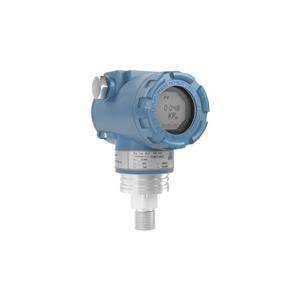
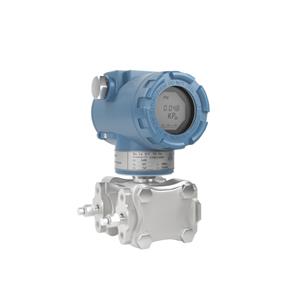
But since the production line upgraded to HART smart instruments, Zhang was able to handle it all from the control room—remote diagnostics, online calibration, and fault localization were completed in one go.
The secret weapon is the HART protocol
▶ What is HART?
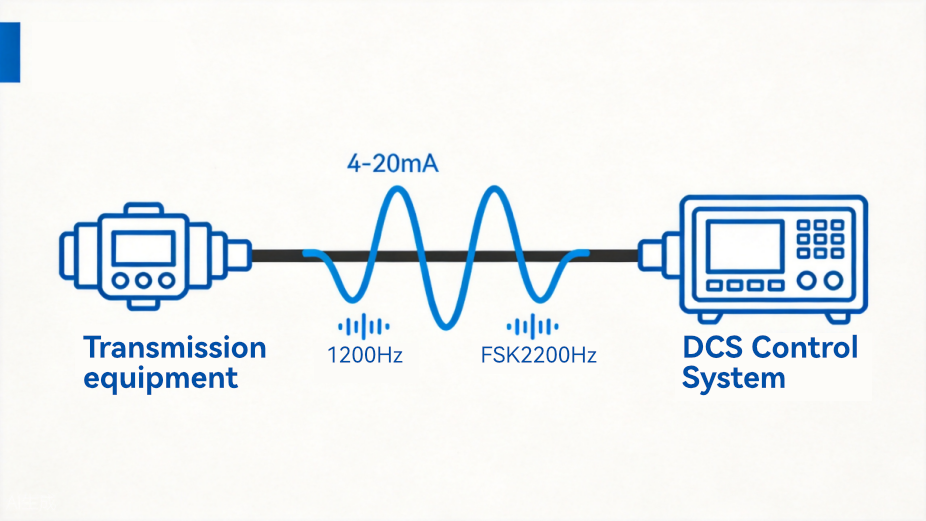
In a nutshell: HART is the most practical “hybrid communication” technology in industrial field.
Its most powerful feature is called “coexistence on the same line”:
▸ 4–20 mA analog signal: Handles real-time control tasks---stable and reliable
▸ Digital signals:Superimposed on the same wire to transmit device status, diagnostic information, and configuration parameters
To put it simply: the analog signal is the “heartbeat,” and the digital signal is the “medical report.” One wire carries both.
Key Technical Parameters:
Parameter | Description |
Modulation Method | Bell 202 FSK |
Frequency | 1200 Hz = “1”, 2200 Hz = “0” |
Digital Signal Amplitude | ±0.5 mA (zero interference) |
Power Supply | 12–42 V, two-wire system |
Topology | Master-slave configuration, up to 15 slave devices |
No rewiring required, no downtime for retrofitting. This is why over 30 million devices worldwide use the HART protocol.
▶ Choosing the Right Chip Is Like Laying the "Foundation" of Your Solution
The core architecture of HART hardware is simple: HART chip + DAC + MCU—a trinity.
But choosing the wrong chip leads to endless headaches down the line. We’ve compiled a practical selection guide:
◈ Comparison of Core HART Chips
Model | Manufacturer | Key Features | Applicable Scenarios |
AD5700/AD5700-1 | ADI | Ultra-low power consumption, HART certified | High-precision transmitters, high-end instruments |
A5191 | ONSEMI | Industrial Wide Temperature Range, Mature Peripherals | Upgrade of existing instruments; Porting from old designs |
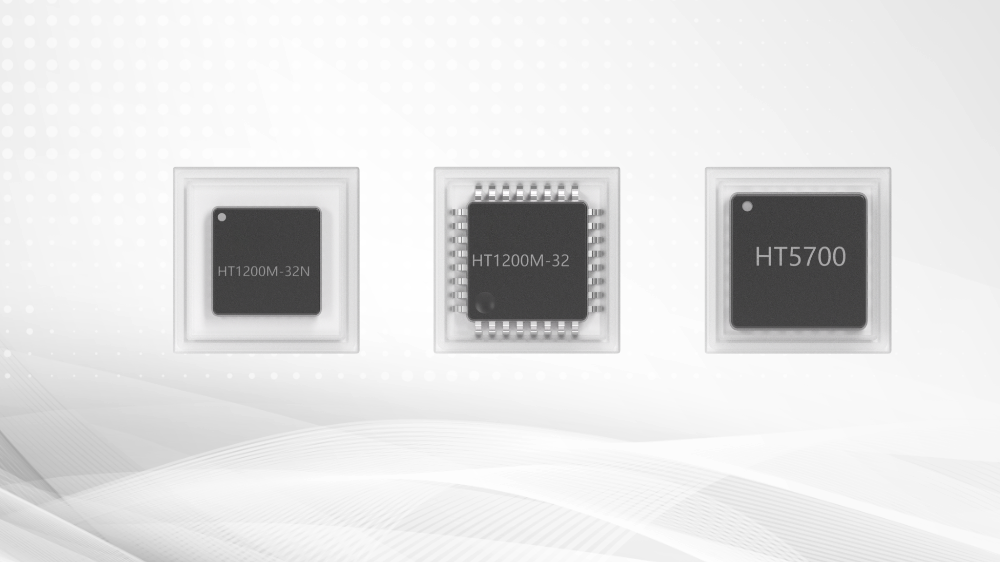
HT5700 | MICROCYBER | Pin-to-Pin compatible with AD5700 | Competitive alternative; Mass Production |
MICROCYBER | Pin-to-Pin compatible with AD5191 | Competitive alternative; Mass Production |
◈ Recommended Supplementary Chips
▸ DAC (Digital-to-Analog Converter):AD5420/AD5421 (Top choice for HART certification), DAC8830 (Ideal for low-power applications)
▸ MCU (Master Controller): STM32L0/L4 Series (Highly versatile, mature ecosystem), ADuCM360 (Industrial-grade, high integration)
MICROCYBER HART CHIP: Replacing AD5700 with HT5700 reduces cost by 50%-80% with no performance loss.
▶ Hardware Design: Get These Four Stages Right — No Compromises
Signal chain overview:
MCU → HART chip → Coupling circuit → 4–20 mA DAC → Current loop (250 Ω load)
Four key design points to help you avoid pitfalls:
1. HART Chip Peripheral Circuit
Selecting appropriate support circuits and coupling capacitors ensures stable FSK signal transmission.
2. 4–20 mA Output Circuit
Using the AD5421 as a benchmark, this circuit combines current conversion, loop power supply, and FSK signal superposition into a single three-wire solution.
3. Isolation Protection Design
▸ Optocoupler Isolation: Electrical isolation between the MCU and the HART chip
▸ TVS diodes: Absorb transient surges
▸ Self-resetting fuse: Automatic overcurrent protection
4. Golden Rules for PCB Layout
Principles | Description |
Zoned Layout | Strict separation of digital and analog zones |
Short Traces | Critical signal lines should be as short as possible |
Single-point Grounding | Eliminate ground loops |
Impedance matching | 50Ω, ensuring signal integrity |
▶ Protocol Stack Development – Leverage What's Already Built
No need to start from zero!
Three mature solutions in the industry:
▸ HART Communication Foundation Official Stack: Authoritative standard, certification guaranteed.
▸ ADI HART Stack: Supplied by the original chip manufacturer for seamless integration
▸ Microcyber HART Stack: Local technical support with fast response, full HART command set support, production-ready.
◈ Four-Step Development Process
Step 1: Low-Level Driver Development → Initialize UART / HART Chip / DAC
Step 2: Protocol Stack Integration → Import the HART stack and interface with the hardware layer
Step 3: Communication Functionality Implementation → Data Transmission/Reception + Command Parsing
Step 4: Application Layer Development → Business Logic + Host Computer Interaction

Using a mature protocol stack reduces the development cycle by more than half and helps avoid low-level bugs.
▶ Cost-effective Alternatives Meet Future Trends
◈ The Era of Smart Alternatives
Our Chip | Replaces | Core Advantages |
HT5700 | AD5700 | Pin-to-Pin Compatible, 50%-80% Cost Reduction |
HT1200M | A5191HRT | Pin-to-Pin Compatible, 50%-80% Cost Reduction |
Our chips are already field-proven, delivering reliable performance in commercial applications.
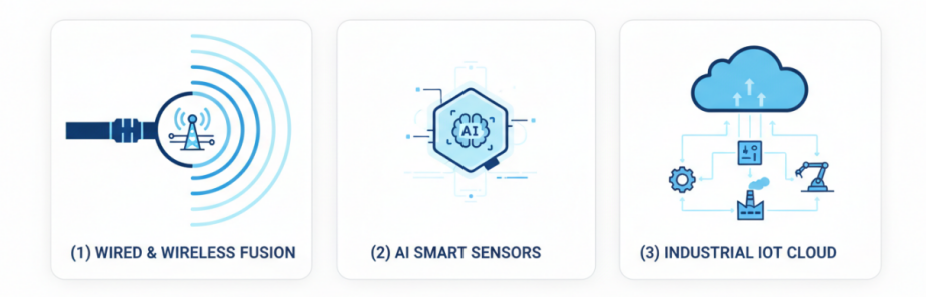
◈ Three Trends in HART Technology
Trend 1: Wired × Wireless Convergence---HART + WirelessHART---breaking wiring constraints to cover more complex scenarios.
Trend 2: Low-Power Intelligence: Edge computing + intelligent diagnostics---enabling devices to "think" on their own.
Trend 3: Deep Integration into the Industrial IoT: Seamless integration with cloud platforms, digital twins, and predictive maintenance systems.
▶ Conclusion
Implementing HART solutions can be complex or simple—
At the heart of it, just four things: Choose the right chip, ensure signal integrity, use a mature protocol stack, and implement end-to-end systematic management.
By doing each step solidly, from chip selection and hardware design to protocol development and testing/certification, you can find the optimal balance between compatibility and cost-effectiveness.
If you’re planning a digital upgrade for your industrial equipment, we hope this guide offers you some practical insights to help along the way.
▶ ❤ Let’s Talk!
Have you used the HART protocol in your projects? What challenges have you encountered? Feel free to share your experiences in the comments section and request free samples.