Microcyber Intelligent Device Full Lifecycle Management Solution
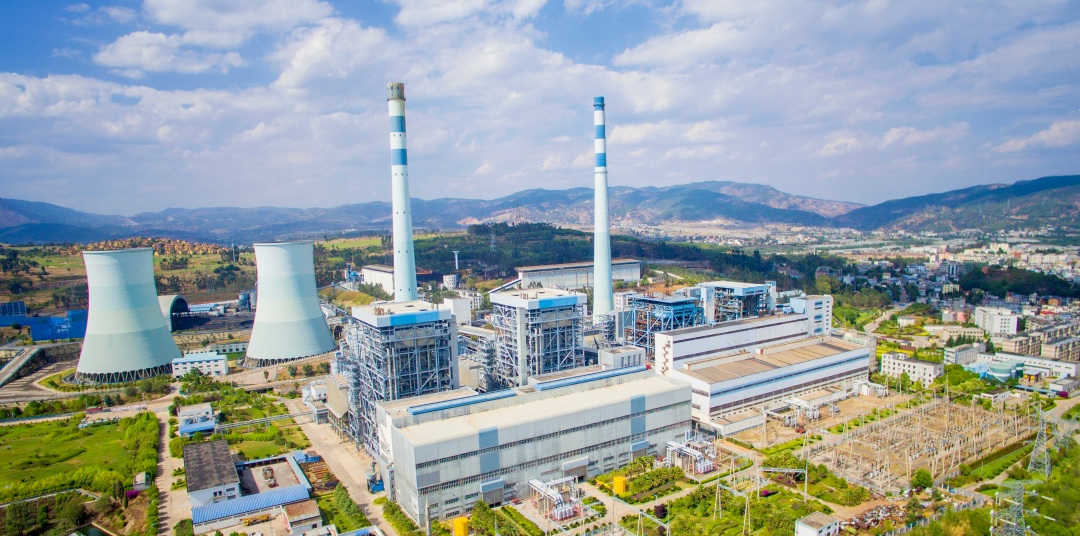
Leveraging over two decades of accumulated expertise in industrial internet and industrial control technologies, Microcyber has developed an integrated hardware-software intelligent device management solution that complies with national industrial standards, Huawei Kunpeng technical specifications, and fieldbus industry standards. Designed to address the intelligent management and control needs of equipment manufacturing and petrochemical facilities, the solution integrates edge data acquisition, digital twin, fault early warning, and full-process operation and maintenance management technologies. By breaking down data silos between devices, it enables enterprises to shift from reactive emergency repairs to predictive maintenance, thereby achieving full-lifecycle digital management of equipment, reducing costs, improving efficiency, and ensuring safe production.
Industry Pain Point Analysis
1. Existing On-Site Pain Points
In equipment manufacturing and petrochemical plant sites, the variety of equipment is extensive, including critical units such as fans, motors, and pumps that rely on manual periodic inspections. This approach incurs significant labor costs and frequent missed detections. Hidden equipment faults cannot be identified in advance, leading to frequent unplanned shutdowns and production capacity losses. Equipment records are still maintained through paper-based ledgers, with maintenance, spare parts, and lubrication logs scattered and disconnected, making full-lifecycle data traceability impossible. The operational expertise of experienced technicians is lost with staff turnover, while new employees struggle with low efficiency in fault diagnosis. Inventory management of spare parts, lubricants, and hazardous waste remains rudimentary, resulting in either excessive material stockpiling or frequent work stoppages due to shortages. Traditional DCS systems only provide alarm notifications when limits are exceeded, failing to identify early-stage equipment anomalies, leaving maintenance operations in a perpetual state of post-failure firefighting.
2. Core Requirements Extraction
(1) Real-time online acquisition of full equipment parameters, enabling early fault warning and reducing the frequency of unplanned shutdowns.
(2) Establish a digital ledger system with full-process online operation and maintenance, eliminating paper-based records.
(3) Capture and accumulate operation and maintenance expertise, establish a knowledge base, and address the issue of technical knowledge gaps caused by workforce turnover.
(4) Implement refined management of spare parts, lubricants, and hazardous waste inventory to reduce material loss costs.
(5) The solution supports flexible deployment and is adaptable to the retrofitting of both new and existing production lines, accommodating the implementation needs of large, medium, and small enterprises.
Core Architecture of the Solution
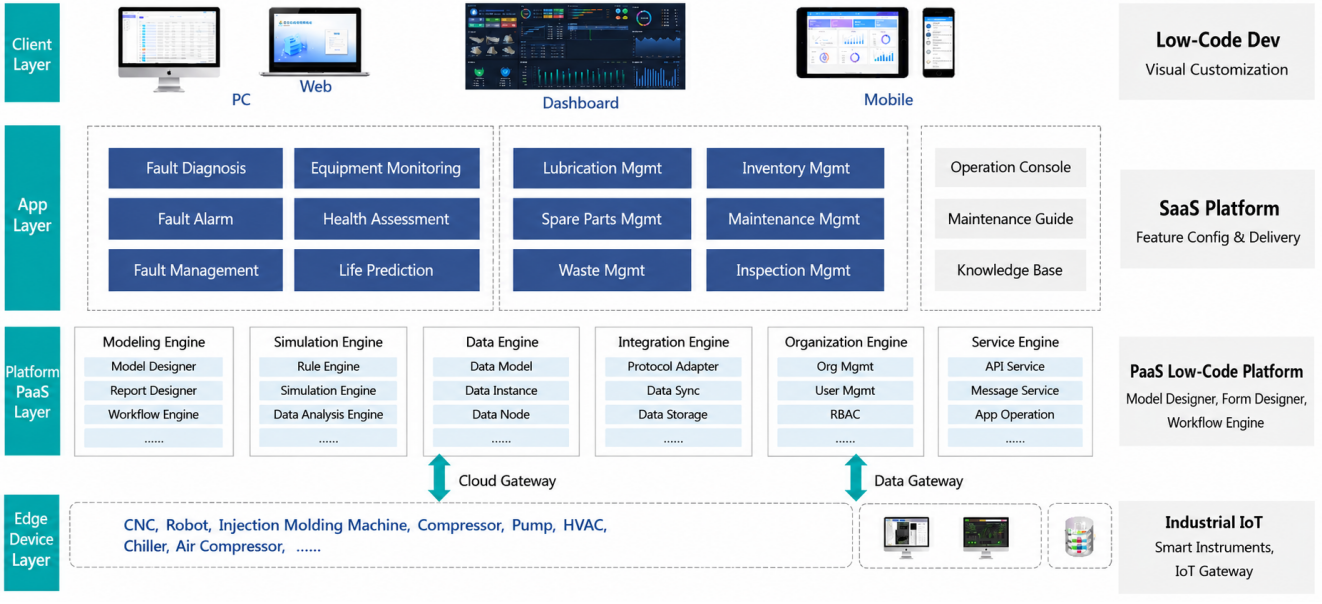
The overall solution is structured into three layers: the Edge Perception Layer, the Platform PaaS Layer, and the Application Layer.
Edge Perception Layer: This layer deploys Microcyber's self-developed edge warning terminals with an IP65 protection rating, paired with vibration, temperature, noise, and displacement sensors. It performs high-precision on-site data acquisition and preliminary fault diagnosis, with data transmitted upward via 4G/5G or industrial fieldbus.Platform PaaS Layer: The industrial internet platform in this layer leverages a low-code engine and data integration engine to carry out data cleansing, mechanism-model and AI-model computations, data storage, and configuration management.
Application Layer: This top layer builds application modules for PC large screens, mobile apps, WeChat Work, and DingTalk, covering functions such as fault early warning, digital twin visualization, digital ledgers, inspection and maintenance management, spare parts management, and an intelligent knowledge base. It also interfaces with existing business systems such as MES, ERP, and DCS to achieve plant-wide data interoperability.
Core Advantages of the Solution
1. Product Selection and Configuration
The hardware adopts Microcyber's self-developed 24-bit high-precision multi-channel edge acquisition and warning terminal, complemented by a full range of industrial sensing components. The software is equipped with the self-developed intelligent device management cloud platform, which supports both SaaS and on-premises private deployment models, with modular functions available for on-demand selection.
2. Targeted Technical Advantages
Dual-model fault diagnosis: mechanism-based models combined with industry-specific AI fault models enable the detection of latent faults before DCS alarm thresholds are triggered, providing early warning in advance.
Digital twin 3D visualization: 1:1 modeling of plant equipment and pipelines, with fault highlighting and pinpoint positioning, plus role-based access control for hierarchical permission management.
Full-chain digital operation and maintenance: One-equipment-one-code digital profiling, closed-loop mobile inspection and repair reporting, with automated generation of maintenance and lubrication schedules.
Industry knowledge base: Aggregates a vast collection of maintenance cases, enables intelligent search and Q&A, and digitizes and preserves hands-on experience for long-term retention.
Industrial-grade hardware adaptability: Equipment withstands extreme temperatures, salt spray, and dust, making it suitable for harsh operating conditions, with support for remote online upgrades.
Expected Outcomes and Value Analysis
1. Technical Performance Improvements
Equipment data acquisition interval is reduced from minutes to milliseconds, enabling early fault warnings to be issued from several days to over ten days in advance, with fault identification coverage reaching over 95% for critical equipment. The system's overall MTBF (Mean Time Between Failures) can achieve up to 100,000 hours, while online monitoring coverage of equipment attains 100%.
2. Economic and Management Benefits
Annual on-site inspection labor can be reduced by 30% to 45%, and spare parts consumption can be lowered by over 25%. Unplanned downtime of critical equipment can be decreased by 40% to 60%, while overall equipment effectiveness (OEE) can be improved by 10% to 20%. Online management of hazardous waste and lubricants eliminates material waste. The implementation of a knowledge base shortens the new employee training cycle by 60%, reducing dependence on veteran technicians for maintenance. At the source, it mitigates safety hazards caused by equipment failures, ensuring fundamental safe production across the plant.
3. Successful Implementation Cases
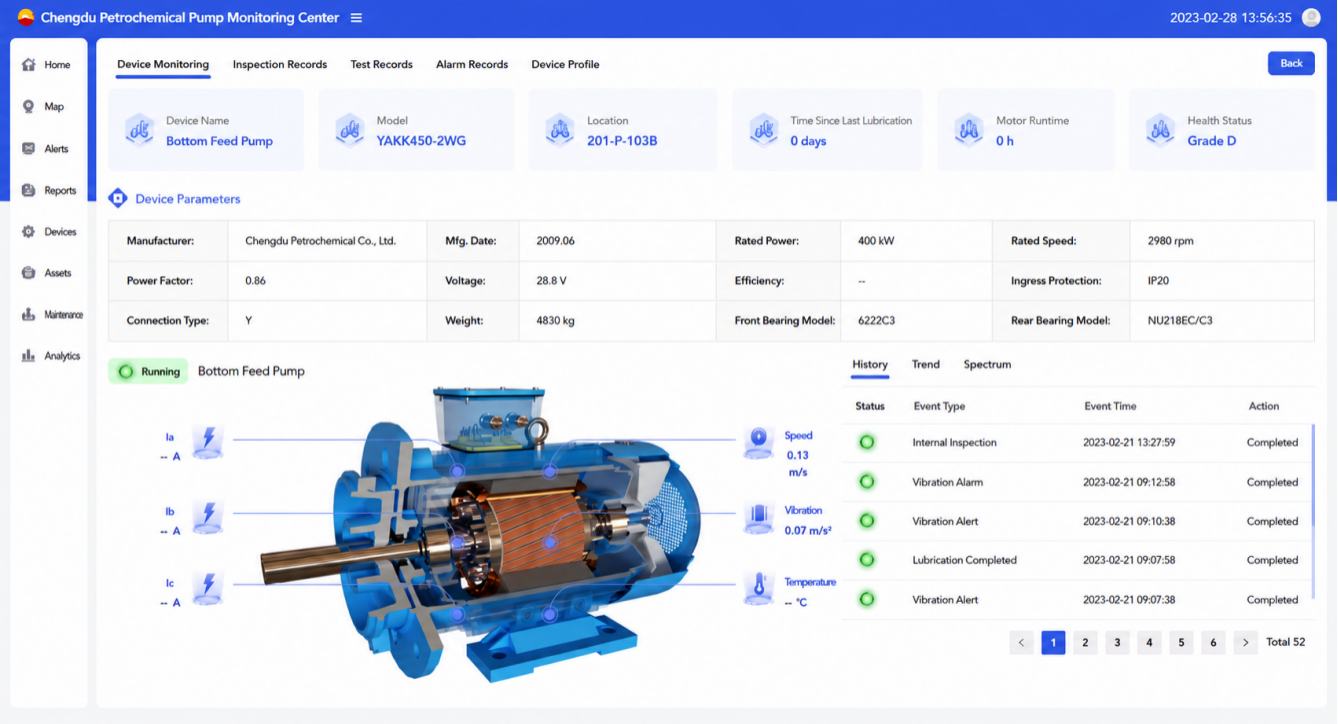
PetroChina Qingyang Petrochemical: With over 2,000 motors, switchgear, and VFDs brought under unified digital management, Microcyber deployed AI-plus-mechanism dual-model diagnostics and 3D digital twin visualization to build a plant-wide intelligent O&M system. Results include a 35% reduction in unplanned failure rates, 60% O&M efficiency gains, and over 20% annual cost savings. The shift from reactive to predictive maintenance has reduced major overhaul frequency, extended asset lifespan, and established a new industry benchmark for large-scale petrochemical facility management.
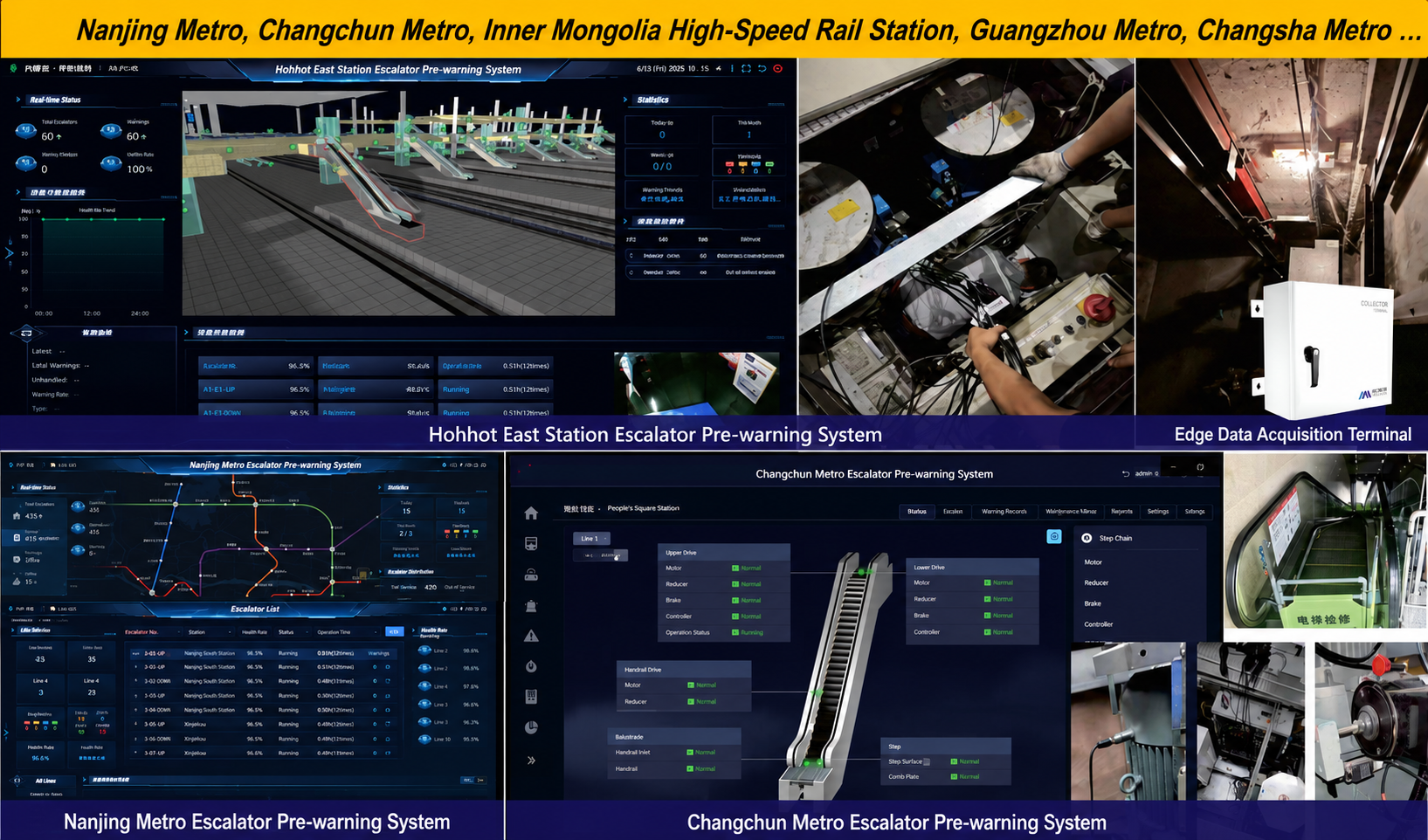
Guangzhou Guangri Elevator, Hitachi Elevator, and other leading enterprises: The solution covers full-lifecycle digital management of both workshop production equipment and finished elevator products. Through edge terminals, it precisely collects operational data from core components such as elevator traction motors and control systems, leveraging intelligent analytics to achieve accurate early fault prediction. The system integrates the entire workflow of ledgers, inspections, maintenance, repairs, and spare parts management, enabling closed-loop online control of O&M operations. The solution has been successfully deployed in multiple metro stations, high-speed railway stations, and other key public venues. Following implementation, equipment O&M time has been reduced by 50%, maintenance costs have dropped by 30%, and the safety and stability of elevator operations have been significantly enhanced, establishing a standardized intelligent O&M solution for the elevator industry.
Typical Application Scenarios
(1) Petrochemical Industry Scenarios
Targeting the management and control challenges of massive electrical and power equipment in refining and chemical plant sites—including pumps, fans, high and low-voltage motors, switchgear cabinets, variable frequency drives, and other critical assets—the solution enables centralized management, unified monitoring, and intelligent O&M across all equipment categories. Leveraging edge data acquisition and AI-based early warning capabilities, it precisely captures latent degradation faults under high-temperature and high-load conditions commonly found in chemical processes. Paired with a digital twin visualization dashboard, it delivers comprehensive visual management and control of plant equipment and pipelines. Designed to withstand the harsh operating conditions typical of the petrochemical industry, the solution can rapidly replicate the successful deployment model established at Qingyang Petrochemical, helping chemical enterprises achieve upgrades in cost reduction, quality improvement, and safety assurance.
(2) Elevator Industry-Wide Value Chain Scenarios
The solution covers the full spectrum of elevator industry scenarios, from production to application. On the production side, it enables digital O&M management of factory production equipment and processing machinery, ensuring stable and reliable operation of manufacturing assets. On the application side, it focuses on public scenarios such as commercial elevators, metro elevators, and high-speed railway station elevators. For core components including traction machines, bearings, and control systems, the solution provides real-time condition monitoring, early fault warning, full-lifecycle ledger management, and closed-loop maintenance. This significantly reduces elevator failure rates, enhances the safety and timeliness of equipment O&M in public settings, and fully supports the elevator industry's transition toward standardized and intelligent O&M upgrades.
(3) General Equipment Manufacturing Scenarios
The solution adapts to various production facilities in machinery manufacturing, equipment processing, and other industrial sectors. Targeting general-purpose industrial equipment such as machine tools, fans, pumps, and transmission devices, it addresses common pain points including low efficiency of traditional manual inspections, delayed fault detection, disorganized ledgers, and crude material management. Through digital ledgers, mobile-enabled closed-loop O&M, refined spare parts management, and an intelligent knowledge base, the solution comprehensively standardizes equipment O&M processes, improves overall equipment utilization, and reduces O&M costs for small and medium-sized manufacturing enterprises. It is highly adaptable to digital retrofitting of both new and existing production lines, offering strong versatility and ease of deployment.