Industrial Communication Upgrade – Modbus to HART Actuator Built-in Module: HART Communication Integration Solution for Electric Actuators
Introduction
In process industry settings, numerous electric actuators use Modbus RTU communication. These actuators receive opening settings and start/stop commands via Modbus registers and provide feedback on valve position, torque, and other status information, exhibiting mature and reliable control logic. However, when integrated with control systems that primarily use HART, these Modbus actuators face a “language barrier”—they cannot directly communicate with the HART master. The M0310-ACT offers a convenient solution: “packaging” the Modbus actuator as a HART actuator, allowing the HART master to perceive it as directly controlling a native HART device, while in reality, all control commands are relayed to the actuator via Modbus. Specifically:
From the HART master's perspective: The M0310-ACT is an intelligent actuator that conforms to the HART 7.9 standard. It can set valve opening, trigger emergency braking, and read status data through HART commands.
From the actuator's perspective: The M0310-ACT is a Modbus master. After parsing the HART commands, it writes the control instructions into the actuator's main control board registers through Modbus write operations; at the same time, it reads the actuator's status registers in a loop and updates the HART variables.
This article will focus on “how to turn a Modbus actuator into a HART actuator”, systematically explaining the product features, integration methods, configuration points and typical applications of the M0310-ACT, providing actuator manufacturers with practical implementation solutions.
1. Product overview | M0310-ACT , a dedicated protocol bridge for actuators
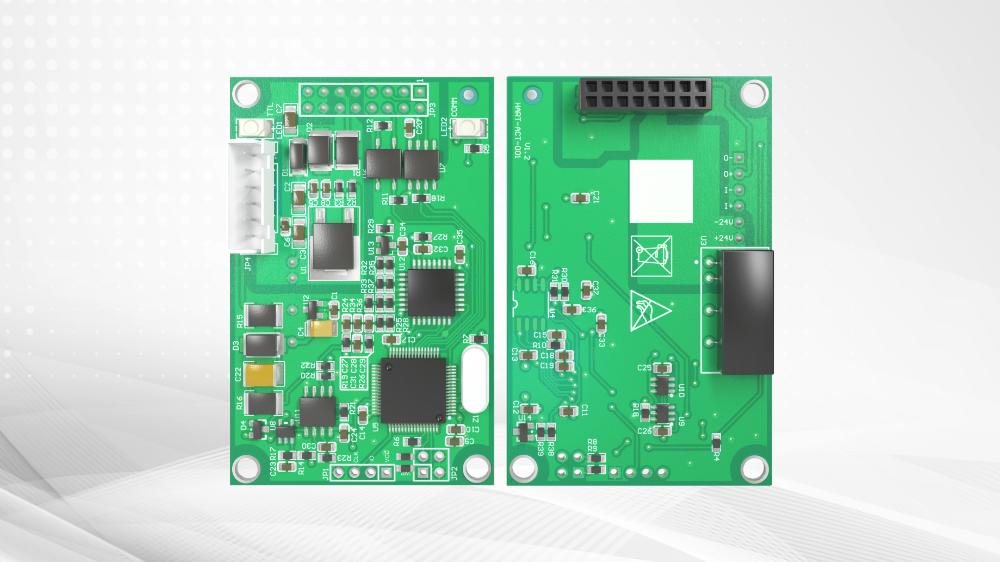
The M0310-ACT is Microcyber M-series built-in module, specifically designed for HART communication in electric actuators . Its core function is to build a bidirectional translation bridge between Modbus actuators and HART masters. It features a modular design, making it easy to integrate and deploy.
• Input side : Standard Modbus RTU interface, directly connected to the actuator main control board, adapting to the existing equipment communication logic.
• Output side : Compliant HART 7.9 slave interface, connecting to HART master, control system or AMS device management system.
• Core functions : bidirectional protocol translation, HART instruction to Modbus register operation, Modbus status data to HART standard variables, without the need for additional protocol stack development.
2. Technological advantages | Four key features, adaptable to industrial sites

2.1 Dual-channel dedicated design, actuator-specific optimization
The module is custom-designed with independent dual channels to address the operating characteristics of electric actuators, ensuring clear division of labor, stable operation, and completely avoiding confusion between control and monitoring signals.
Channel type | Core Uses | Implementation | Core advantages |
Status monitoring channel | Read opening degree, torque, temperature, and equipment status words. | Six device variables (DV0~DV5) | Multi-parameter batch reading, compatible with HART common commands, making data retrieval more efficient. |
Control command channel | Target opening setting, start/stop, emergency braking, etc. | Independent Actuator Parameter Configuration | Independent control logic avoids conflicts with state variables, making operations safer. |
2.2 Full-scenario protocol compatibility, adaptable to mainstream devices
• HART Protocol : Strictly compliant with the HART 7.9 standard, supports 6 device variables, 4 of which can be mapped to PV/SV/TV/QV dynamic variables, and is compatible with various HART masters and management systems.
• Modbus Protocol : As a Modbus master, it supports RTU mode, and the baud rate, parity method, and stop bits can be flexibly configured; it is compatible with 01H/02H/03H/04H/05H/10H full-function codes, covering the communication needs of most actuators.
2.3 Flexible parameter configuration to adapt to different actuators
The module features a dedicated configuration interface, allowing users to customize parameters based on the type of actuator in the field, ensuring maximum adaptability.
• Supports free switching between two types of actuators: switch type and position control type;
• Customize the control register address and write values corresponding to various instructions;
• Flexible power-on setting source to adapt to different start-stop logic requirements.
2.4 Industrial-grade hardware performance, stable operation in harsh environments
• Wide voltage power supply : 24V±10% DC, adaptable to fluctuating power supply in the field, providing more stable power supply;
• Electrical isolation : Modbus and HART interfaces are isolated with 500VAC to block ground loop interference and provide lightning protection and interference immunity;
• Wide temperature range : -40℃~85℃ operating temperature, suitable for harsh industrial environments such as high temperature and extreme cold;
• Fast start-up : Power-on startup time ≤ 5 seconds, meeting the real-time requirements of industrial control, with no response delay.
3. Practical engineering | Integration + configuration: a comprehensive guide to implementation techniques
3.1 Hardware Integration: extremely simple wiring, rapid deployment
• Provides a TTL level Modbus RTU slave interface (3.3V/5V optional) for direct connection to the actuator main control board;
• The input register maps read-only status parameters such as opening degree and torque, while maintaining the original monitoring logic;
• The register reserves writable parameters such as target opening degree and instruction control to adapt to control requirements.
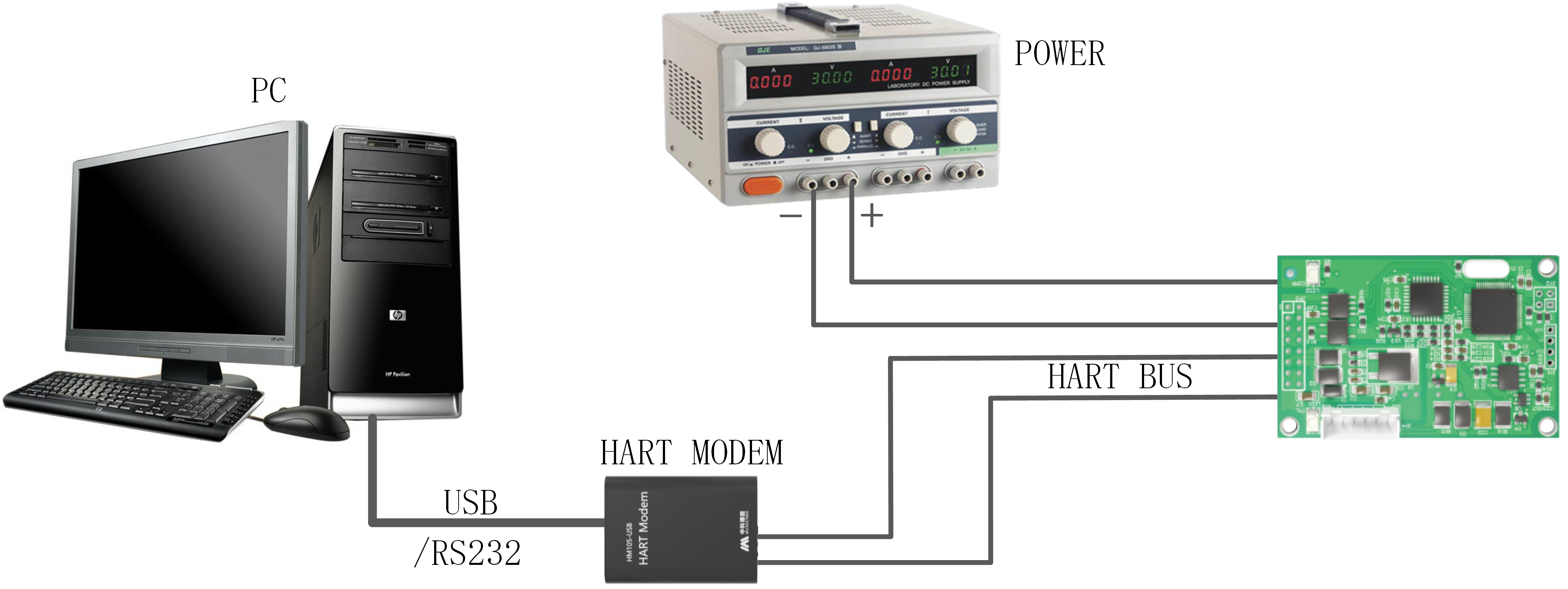
3.2 Parameter configuration: core steps and tips for avoiding pitfalls
3.2.1 Preliminary preparations
Connect the circuit via a HART handheld device or a PC+HART modem to confirm that the module is powered on, connected to the network, and in a ready-to-configure state.
3.2.2 Core configuration items
• Modbus parameters : baud rate, data bits, and parity method must be completely consistent with the actuator to ensure smooth communication;
• HART parameter : Default short address 0, which can be adjusted according to the on-site networking requirements;
• Data mapping : Map Modbus registers to device variables, and then allocate them to dynamic variables. Pay attention to data types and byte order. The accuracy of the mapping can be verified by numerical comparison.
• Actuator instructions : Configure the control register address and set the corresponding instruction values for open, close, stop, and emergency braking.
3.2.3 Advanced configuration techniques
• The configurable device status register maps device faults and abnormal states to HART diagnostic information, enabling early warning.
• The PV range can be remotely modified and read from the Modbus register to adapt to the dynamic adjustment requirements of the field conditions.
4. Typical scenarios | Two successful applications that can be directly reused
Scenario 1: Rapid product upgrades by actuator manufacturers
Pain point : The manufacturer has an existing Modbus RTU actuator product line, but customers require upgrades to the HART version and integration with the AMS management system. Re-developing such an upgrade would be costly and time-consuming.
Solution : The existing main control board has reserved module installation slots and is equipped with isolated power supplies. Status parameters are mapped to device variables, and control commands are configured through a dedicated channel. No changes are required to the core hardware, and HART compliant products can be launched in a short time .
Scenario 2: Digital transformation of existing factory assets
Pain point : Chemical plants and petrochemical plants have a large number of existing Modbus actuators that need to be connected to a new HART control system. The overall replacement cost is too high and the losses from production downtime are significant.
Solution : Develop an external HART communication box with a built-in M0310-ACT module and isolated power supply, which directly connects to the actuator's Modbus interface. Once configured, it can be put into operation without interrupting production or changing the production line, achieving low-cost upgrades for existing equipment .
5. Conclusion | Low-cost breakthroughs to facilitate industrial digitalization
The M0310-ACT built-in module provides electric actuator manufacturers with a shortcut to quickly achieve HART integration . With its dual-channel optimized design, complete protocol stack, and industrial-grade hardware performance, it can seamlessly transform ordinary Modbus actuators into standard HART smart devices without complex development.
Whether it's the rapid iteration and launch of new products or the transformation and upgrading of existing factory assets, it can significantly shorten the cycle and reduce costs, perfectly meeting the needs of digital and networked transformation of process industry equipment.
In the future, as industrial digitalization deepens, this module will continue to play its role as a protocol bridge, helping manufacturers seize the market, helping end users revitalize existing assets, and creating tangible industrial value.
Tip : During actual deployment, ensuring proper electrical isolation and parameter matching will result in smoother on-site debugging and more stable long-term operation. |