Analysis of the FOUNDATION Fieldbus Device Certification Process

Analysis of the FOUNDATION Fieldbus Device Certification Process

1.1 FOUNDATION Fieldbus Certification Process
The FOUNDATION Fieldbus certification is exclusively managed by FieldComm Group and represents the most stringent, comprehensive, and complex certification among the three major protocols, with a focus on distributed function block control and bus system stability. The entire process comprises six distinct phases:
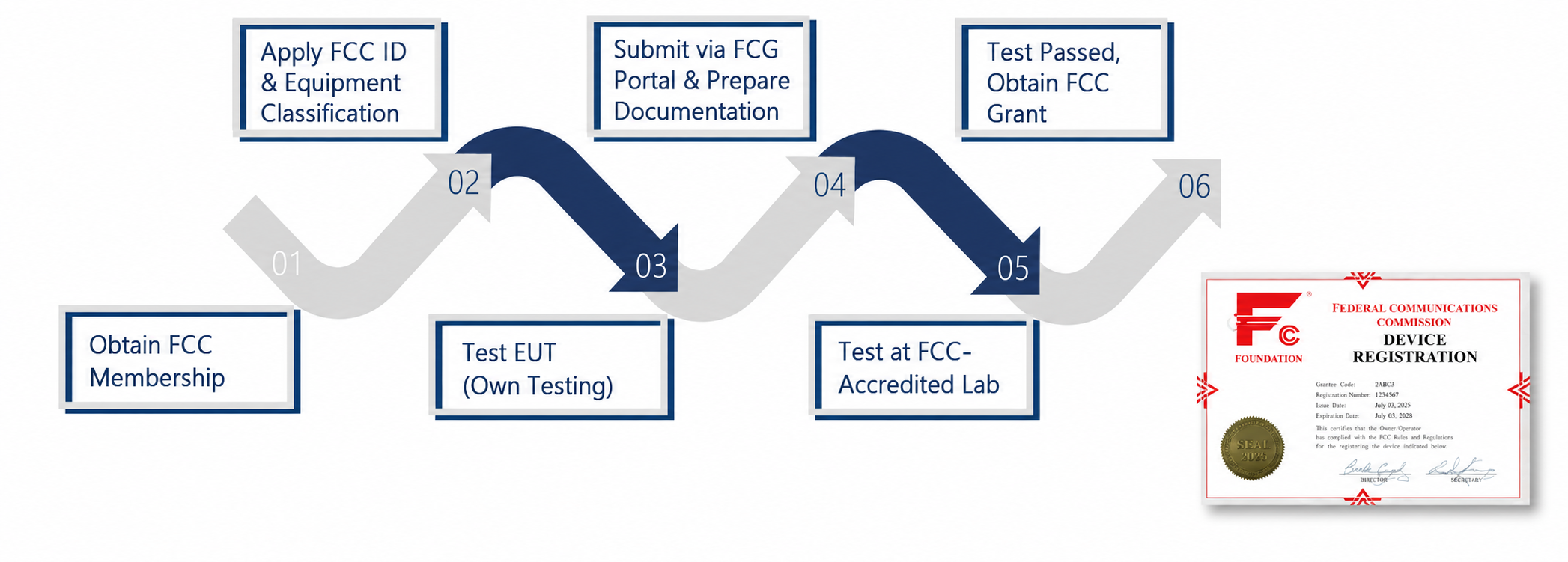
Step 1: Membership Qualifications and Preliminary Preparation. Enterprises must join FieldComm Group to obtain certification authority, thoroughly study the FOUNDATION Fieldbus function block specifications, communication protocol standards, and testing outlines, complete hardware and software development for their devices, with particular emphasis on ensuring compliance and completeness of built-in function blocks.
Step 2: Comprehensive internal self-testing. The enterprise establishes a FOUNDATION Fieldbus -standard testing network to independently conduct full-range self-tests covering protocol consistency, functional block operations, bus synchronization, distributed control, fault tolerance and self-healing, addresses issues such as missing functions, logical errors, and communication anomalies, and refines technical documentation.
Step 3: Document Submission and Preliminary Review. Submit the certification application, product prototype documentation, functional block source code, device specification file, self-test report, and software/hardware version details to FieldComm Group. FieldComm Group will prioritize reviewing document completeness and functional block compliance; non-compliant submissions will be returned for rectification.
Step 4: Authorize the laboratory to conduct in-depth testing. The FieldComm Group -authorized laboratory establishes a fully realistic FOUNDATION Fieldbus industrial networking environment and performs comprehensive, full-scenario, and full-condition in-depth testing covering FOUNDATION Fieldbus 's core components—including distributed control, functional block logic, bus communication, and system fault tolerance. All test data is meticulously documented; any issues identified are reported back to the enterprise for iterative improvement and retesting.
Step 5: Final review by FieldComm Group. The FieldComm Group technical expert team will re-examine the test reports, device functionality, and protocol compliance, with a focus on verifying the control logic of functional blocks and distributed collaboration capabilities, to confirm full compliance with FOUNDATION Fieldbus 's official standards.
Step 6: Registration, Certification, and Ecosystem Integration. Upon approval, complete official product registration, issue the FOUNDATION Fieldbus certification certificate, authorize the use of the certification mark, and include the product in the global FOUNDATION Fieldbus Device Compatibility Directory to ensure interoperability across the global ecosystem.
1.2 Key Test Items for FOUNDATION Fieldbus Certification
The key distinction of the FOUNDATION Fieldbus certification from HART and PROFIBUS PA lies in its emphasis on functional block control and distributed intelligence. Beyond basic communication testing, it introduces a comprehensive set of specialized core test items, organized into five major modules:
First, basic protocol consistency testing. This involves verifying fundamental parameters of the FOUNDATION Fieldbus H1 bus, including physical layer signals, data frame formats, communication timing, transmission rates, bus power supply, and addressing mechanisms, to ensure compliant and stable underlying communication.
Second, functional block compliance and logic testing. This constitutes the core focus of FOUNDATION Fieldbus certification, comprehensively evaluating the completeness, computational accuracy, and logical compliance of standard functional blocks—including AI, AO, PID, accumulation, alarms, and interlocks—in device. It verifies that parameter configurations, algorithm execution, and output responses fully comply with official specifications, with no logical discrepancies or functional deficiencies.
Third, distributed control collaborative testing. This test evaluates the functional block coordination, distributed closed-loop control, and cross-device logical synchronization among multiple FOUNDATION Fieldbus devices, verifying their ability to autonomously achieve precise control and interlocked protection without intervention from a central controller.
Fourth, bus synchronization and real-time performance testing. This involves evaluating the global clock synchronization accuracy of the FOUNDATION Fieldbus, data transmission real-time performance, and task scheduling synchronization among multiple devices to ensure unified control actions without latency or deviations in large-scale networking systems.
Fifth, system fault tolerance and self-healing testing. By simulating scenarios such as bus failures, device offline states, parameter anomalies, and signal interference, the tests evaluate the FOUNDATION Fieldbus 's capabilities in redundant switching, fault isolation, system self-healing, and data backup recovery to ensure continuous and uninterrupted system operation.
1.3 Common Issues in FOUNDATION Fieldbus Certification
The FOUNDATION Fieldbus device certification has the highest requirements, with failure issues predominantly occurring in dedicated functional blocks and distributed control systems. Common problems include the following:
First, the standard functional blocks are incomplete or non-compliant. Enterprises may arbitrarily remove standard functional blocks, modify algorithm logic, or set non-standard parameters for custom functional blocks, resulting in distributed control logic failing to meet official standards and preventing cross-device coordination—this constitutes the primary cause of certification failure.
Secondly, there is insufficient distributed collaborative capability. While individual device functional blocks operate normally, when multiple devices are networked together, cross-device block coordination and closed-loop control may exhibit logical inconsistencies, response delays, or parameter mismatches, preventing the realization of distributed intelligent control.
Third, the bus synchronization accuracy exceeds the specified limits. In large-scale networking scenarios, excessive clock synchronization deviations among devices result in asynchronous control actions across multiple units and fluctuations in process parameters, failing to meet the requirements for high-precision continuous production control.
Fourth, the system exhibits weak fault-tolerance and self-healing capabilities. In cases of bus anomalies or device failures, it fails to rapidly perform fault isolation and redundancy switching, leading to system downtime, data loss, and control failure.
Fifth, the device description files exhibit poor compatibility. The FOUNDATION Fieldbus device DD files are poorly formatted, lacking functional block mappings and containing erroneous parameter definitions, which prevents the host system from accurately identifying device functions or invoking control logic, thereby compromising system configuration and maintenance.